Introduction

This story begins in the Four Corners region of the United States, once referred to as a national energy sacrifice area. Located at the meeting point of Colorado, New Mexico, Utah, and Arizona, the Four Corners has anchored the energy industry since the late 19th century. Coal mined near Durango, Colorado, fueled the local mining boom and led to the discovery of natural gas, further raising the region’s profile. By the 1920s, energy development had begun to accelerate in earnest.

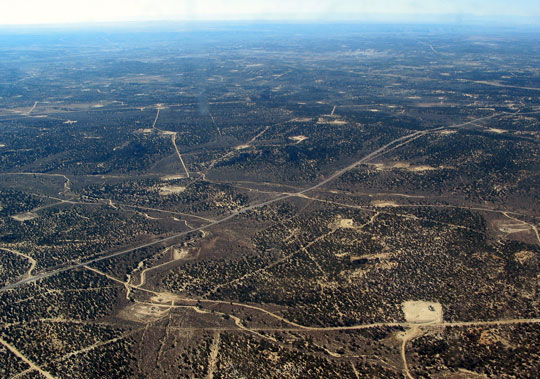
For decades, coal-fired power plants in the region sent electricity to cities as far away as Tucson and Los Angeles. Farmington, New Mexico, serves as the hub of the San Juan Basin, where more than 40,000 wells have been drilled, and its oil and gas feed into major pipelines that supply markets across the West and beyond.

Late 1800s

1882

Coal Mining Arrives in the Four Corners

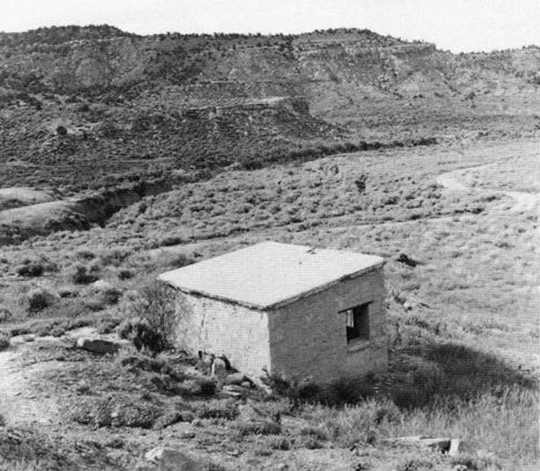
By the time the Atchison, Topeka & Santa Fe Railroad reached Gallup, NM in 1882, it needed fuel — and found it in the coal seams underfoot. That same year, the Gallup (Gibson) Mine opened as the region’s first commercial coal mine, launching an industry that would earn Gallup the nickname “Carbon City” and shape the town and region for the next century.
This photo shows one of the mine’s “powder houses” — built to store the explosives used to break coal loose underground. Their heavy walls were meant to contain accidental detonations and keep sparks away from the volatile contents. Several of these sturdy structures are still standing today, quiet reminders of the region’s earliest mining days.

Source: Noe, S.C. (1997), reprinted

1889

Coal in Durango, Colorado

Coal mining took hold in the Durango area soon after the town’s founding in 1880, fueling the smelters, railroads, and homes of the growing settlement. Small mines opened throughout the surrounding hills and canyons over the next few decades, with the Porter Mine in Wildcat Canyon — drilled in 1889, producing by 1890 — standing out as one of La Plata County’s most productive. Founded by John Porter, one of Durango’s early civic leaders, the mine grew into a small company village served by its own Rio Grande Southern Railroad depot before fire and storm damage forced its closure in 1908. Today, little remains of most of these early operations beyond scattered foundations, tailings, and old railroad grades tucked into the surrounding canyons.

Coal mining didn’t stop with the earliest mines — it shaped both towns for decades afterward. In Durango, mining spread from Horse Gulch — where founder John Porter first spotted the region’s coal outcroppings in 1875 — to sites throughout Lightner Creek Canyon, Wildcat Canyon, Hay Gulch, Hesperus, and beyond. The City Coal Mine in Horse Gulch itself operated on and off from 1887 until 1923, and coal mining around Durango continues today at the King Coal Mine in Hay Gulch.
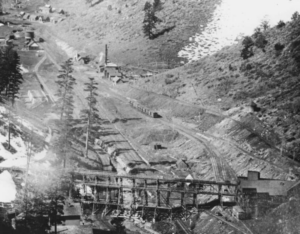
Source: Ed Horvat for Animas Museum, via Durango Herald (image courtesy La Plata County Historical Society Photo Collections).
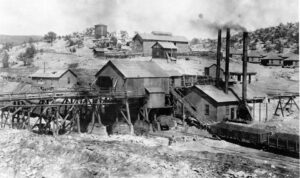
Source: Noe, S.C. (1997), NM Bureau of Geology Open-File Report 530; Durango Herald / Ed Horvat for Animas Museum.

[bold_timeline_item_button title=”Expand” style=”” shape=”” color=”” size=”inline” url=”#” el_class=”bold_timeline_group_button”]

1920s

1921

Oil and Gas in Farmington

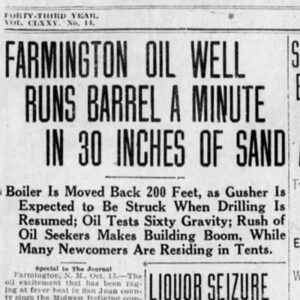
On October 21, 1921, a well drilled by the Aztec Oil Syndicate blew in just south of Aztec — the first commercial gas strike in the San Juan Basin. The roar could reportedly be heard for miles down the river toward Farmington. Within weeks, gas was piped into town and sold for cash for the first time in New Mexico history — powering stoves and lights in local homes.

That single well set off a century of oil and gas development that transformed a quiet agricultural valley into an energy boomtown. By the 1950s, Farmington’s population had grown nearly 763% in a single decade, and the Four Corners became one of the country’s major natural gas-producing regions — a legacy that still shapes the local economy today.

Albuquerque Journal, 1922 Newspapers.com

[bold_timeline_item_button title=”Expand” style=”” shape=”” color=”” size=”inline” url=”#” el_class=”bold_timeline_group_button”]

1950s

1956

Greater Aneth Oil Field Discovered

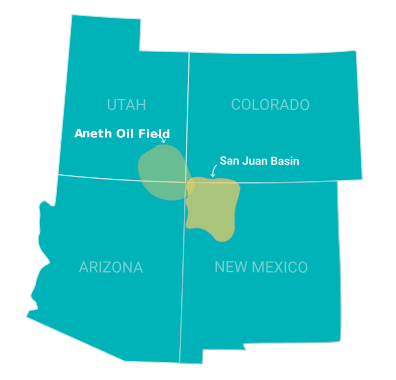
In April 1956, Texaco completed the Navajo D-1 discovery well in southeastern Utah’s Paradox Basin, striking oil in the Pennsylvanian-age Paradox Formation. The find launched the Greater Aneth field, which would go on to become Utah’s largest oil producer, spanning roughly 50,000 acres and ultimately yielding well over 450 million barrels of oil.

Sources: Utah Geological Survey; Navajo Nation Oil and Gas Company; AAPG/Datapages.

National Energy Technology Lab

1957

Navajo Mine Lease

In 1957, Navajo Nation leased 24,000 acres to the Utah Construction and Mining Company, which began large-scale coal mining at what became known as Navajo Mine in 1963. Three years after that original coal lease, in 1960, Navajo Nation signed a second lease allowing construction of the Four Corners Power Plant — evidence of even greater energy export expansion, with Arizona Public Service as the plant’s primary owner. Southern California Edison later joined as a co-owner when the plant expanded with two additional units in the late 1960s.

[bold_timeline_item_button title=”Expand” style=”” shape=”” color=”” size=”inline” url=”#” el_class=”bold_timeline_group_button”]

1960s

1961

McKinley Mine, Gallup

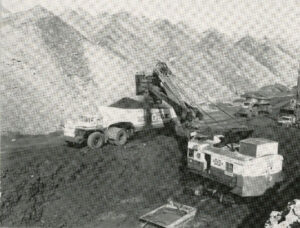
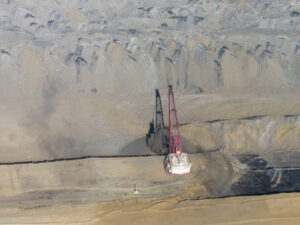
Beginning in 1961, large-scale surface (strip) mining took hold at the McKinley Mine, an open-pit operation about 20 miles northwest of Gallup and just east of Window Rock, spanning Navajo Nation, public, and private lands. Over nearly five decades of operation, the mine supplied coal to Arizona power plants including the Cholla Power Plant in Joseph City and the Coronado Generating Station in St. Johns, before its coal reserves were finally depleted and the mine closed in 2009.

Photo by: Snowpeak – Power PlantUploaded by PDTillman, CC BY 2.0

Source: NM Bureau of Geology Open-File Report 530; City of Gallup (Andrew Butler).

1963

Construction of Four Corners Power Plant

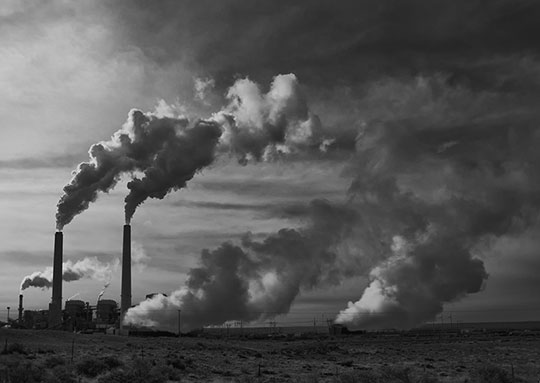
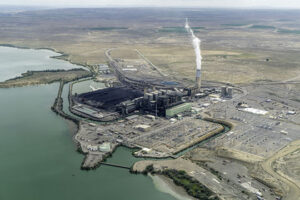
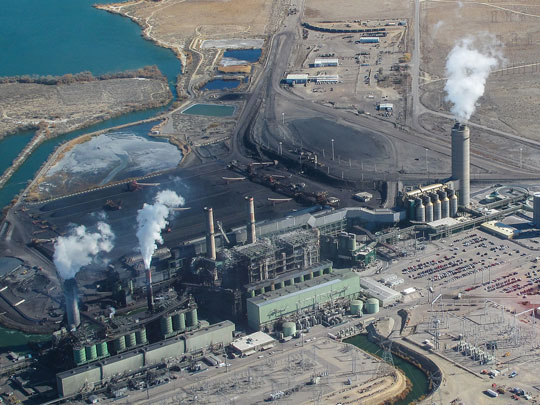
Construction of the coal-fired Four Corners Power Plant began in the1960s, with its first units coming online starting in 1963 and additional units following through 1970. Built on Navajo Nation land near Fruitland, New Mexico, the plant and its supplying coal mines operate under leasing and royalty agreements with the Navajo Nation.

Aerial photos by EcoFlight.

[bold_timeline_item_button title=”Expand” style=”” shape=”” color=”” size=”inline” url=”#” el_class=”bold_timeline_group_button”]

1970s

1970

Construction of San Juan Generating Station

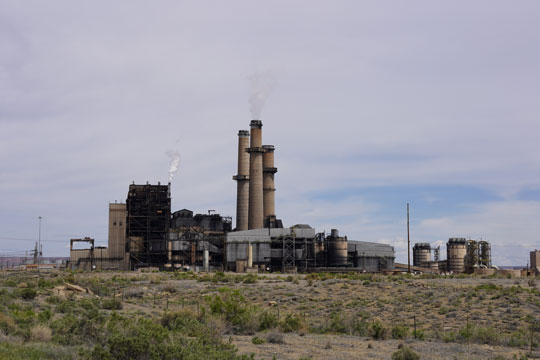
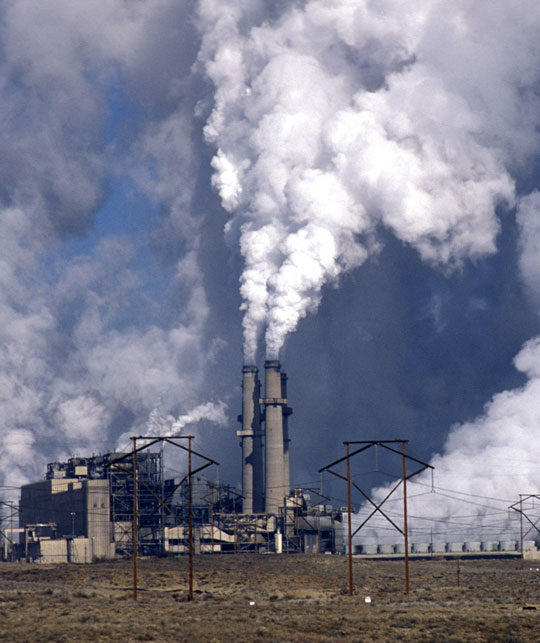
From 1970 to 1973, Public Utility Company New Mexico, PNM, along with several other minor owners, constructed and began operation of San Juan Generating Station and San Juan Mine. This complex became New Mexico’s largest polluter.

Photo by: Commons.wikimedia.org/wiki/User:Baltakatei 

1973

Nixon Designates the Four Corners Region as an “Energy Sacrifice Zone”

National recognition fell upon the Four Corners when a National Academy of Sciences report designated the region a “national sacrifice area” in the 1970s, a term that stuck and was later popularized by the 1983 documentary The Four Corners: A National Sacrifice Area? This allowed for unchecked environmental destruction by companies in the name of extraction. The burden of energy extraction and production fell on the Four Corners, while the economic benefit and electric power left to other parts of the country. Decades later, a new technology — horizontal drilling — would supercharge that extraction even further, becoming the dominant method of U.S. oil and gas production by the early 2010s.

Aerial photo by EcoFlight.

[bold_timeline_item_button title=”Expand” style=”” shape=”” color=”” size=”inline” url=”#” el_class=”bold_timeline_group_button”]

Early 2000s

2011

Proposed Desert Rock Power Plant Defeated

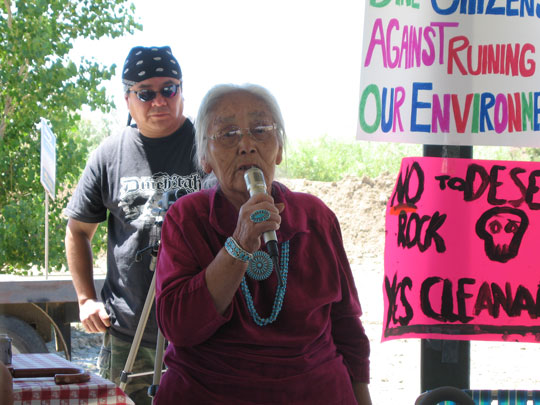
In 2005, Sithe Global and the Diné Power Authority proposed Desert Rock, a 1,500-megawatt coal-fired power plant near Burnham, on the Navajo Nation — a third major coal plant within 15 miles of the existing Four Corners Power Plant and San Juan Generating Station. Grassroots opposition led by Diné C.A.R.E. and allied Four Corners groups organized for years against the project, citing health impacts, water use, and climate concerns. After a prolonged fight through EIS hearings, permit appeals, and shifting energy markets, the project was officially cancelled in 2011 — a landmark victory and a turning point in the region’s energy transition.

Listen to Mike Eisenfeld of San Juan Citizens Alliance talk about this.

2014

NASA Identifies Four Corners as Global Methane Hotspot

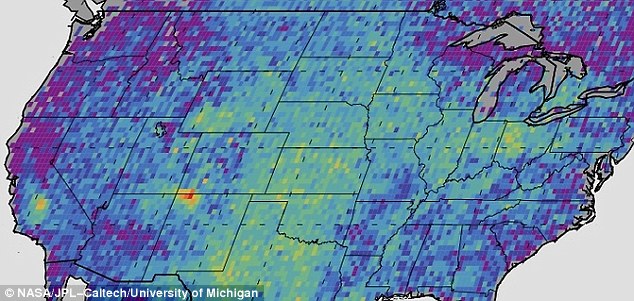
In 2014, satellite images revealed a methane cloud over the San Juan Basin, then described as “the largest U.S. methane anomaly viewed from space.” The finding made national headlines and drew attention to the energy industry’s impact on the region.

Later research added important context. A 2023 study by NOAA and the University of Colorado found that the satellite had passed over each morning, when overnight temperature inversions were trapping methane near the ground in the basin; by afternoon, winds typically dispersed much of it. The cloud was a snapshot of a daily buildup rather than a permanent plume, so the image looks more extreme than conditions are around the clock.

The emissions themselves are real. The same study traced 66 to 75 percent of the basin’s methane to natural gas and coalbed methane operations, with smaller shares from natural seeps and a nearby coal mine. Methane is roughly 28 times more potent than carbon dioxide over a century, which makes finding and fixing those leaks a key part of reducing the region’s climate impact.

The orange and red area near the Four Corners shows elevated methane concentrations measured by satellite from 2003 to 2009. Image Credit: NASA/JPL-Caltech/University of Michigan

[bold_timeline_item_button title=”Expand” style=”” shape=”” color=”” size=”inline” url=”#” el_class=”bold_timeline_group_button”]

2015-2017

2015

Closure of three Four Corners Power Plant Units

Advocates successfully pushed for the closure of three of the five units operating at the Four Corners Power Plant in late 2013/2014 as part of a $182 million mitigation plan to comply with EPA Clean Air Act settlements. These closures were driven by the need to drastically reduce harmful nitrogen oxide emissions earthjustice.org while allowing the plant’s owners to continue operating the larger Units 4 and 5 POWER Magazine. [1, 2] This eliminated 570 megawatts of coal-fired generation – coal-fired generation produces upwards of 2,000 pounds of CO2 per megawatt hour of electricity, a massive reduction in pollution.

Photo by: EcoFlight.

2017

Closure of Half of San Juan Generating Station

Closure of half of San Juan Generating Station. Following the success at Four Corners Power Plant, advocates reviewed the pollution at San Juan Generating Station, which successfully enacted the closure of half of the power plant. 

[bold_timeline_item_button title=”Expand” style=”” shape=”” color=”” size=”inline” url=”#” el_class=”bold_timeline_group_button”]

2019

2019

Energy Transition Act Passed in New Mexico

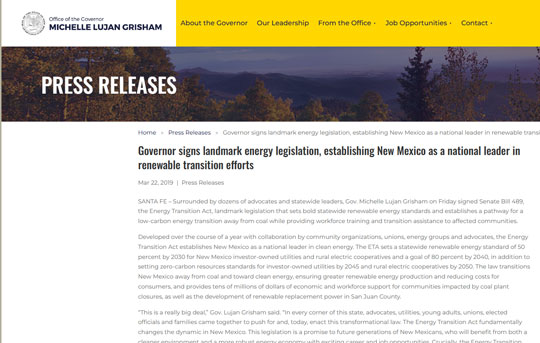
New Mexico’s Energy Transition Act (ETA), passed in 2019, is the state’s answer to the equity concerns at the heart of the Clean Energy Transition. Built through a broad coalition of environmental, labor, and community groups working alongside PNM and the state administration, the bill sets a firm timeline away from fossil fuels — investor-owned utilities must reach 50% renewable energy by 2030, 80% by 2040, and 100% carbon-free by 2045, while rural co-ops hit 50% by 2030 and 100% carbon-free (80% renewable) by 2050 — while also investing in the communities affected by the transition.

2020

Closure of Escalante Generating Station

The Escalante Generating Station was closed alongside considerations for future hydrogen development and carbon sequestration. These processes are marketed as “green” solutions while they in fact still pollute and cause greater harm overall. Hydrogen is described as a “decarbonizing electricity source” but in reality, is a water-intensive and energy-intensive process. The transportation of hydrogen also possesses a significant health and safety threat to surrounding communities.

Source: Tristate

2022

Closure of San Juan Generating Station

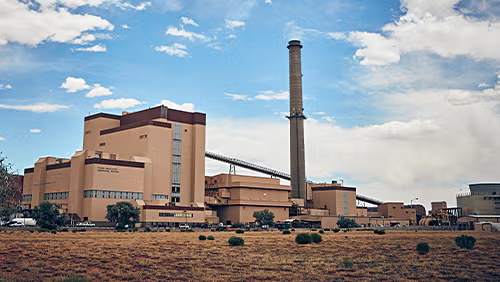
After nearly 50 years of operation, the coal-fired San Juan Generating Station shut down for good on September 30, 2022 — once the largest single source of carbon emissions in New Mexico, having released an estimated 62 million tons of CO2 between 2013 and 2018 alone. The closure was driven by New Mexico’s 2019 Energy Transition Act, which required PNM and other utilities to move toward carbon-free generation and set emission limits the aging plant could no longer meet. Its retirement marked the end of an era for the Four Corners’ energy economy — and the start of the region’s transition toward solar.

Separately, in 2022 New Mexico adopted one of the nation’s strongest oil and gas emissions rules, the Ozone Precursor Pollutants Rule (20.2.50 NMAC). Effective August 5, 2022, it required oil and gas operators in high-ozone counties — including San Juan — to certify emission rates, conduct monthly leak checks, and fix leaks within 15 days. The state estimated the rule would cut ozone-forming pollution by about 260 million pounds a year and methane emissions by more than 851 million pounds a year.

[bold_timeline_item_button title=”Expand” style=”” shape=”” color=”” size=”inline” url=”#” el_class=”bold_timeline_group_button”]

2023-2026

2023

San Juan Solar Begins Construction

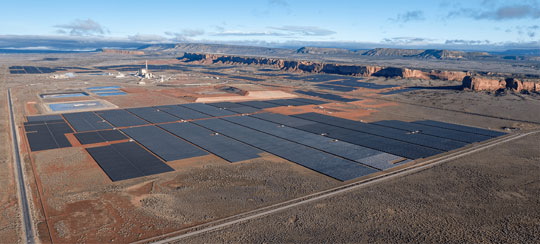
In July 2023, D.E. Shaw Renewable Investments (DESRI) began construction on San Juan Solar, the region’s first major solar project built to replace the retired San Juan Generating Station. The first phase is a 200 MW solar array paired with a 100 MW battery storage system. It sits on land next to the old coal plant and connects to the grid through the plant’s existing transmission infrastructure and is expected to generate enough clean energy to power roughly 52,400 homes, each year. This project was the first concrete proof that solar could replace what coal once provided here. San Juan Solar is the first phase of a larger buildout expected to reach 400 MW once fully developed.

2024

Escalante Solar Goes Online

Origis Energy and Tri-State Generation and Transmission Association brought the 200 MW Escalante Solar project online on June 1, 2024. Built on the site of the former 253-MWac coal-fired Escalante Station near Grants, N.M. — retired in 2020 — the project now delivers enough carbon-free power to serve an estimated 63,000 homes across Tri-State’s membership, including 11 electric cooperative members in New Mexico, under a power purchase agreement with Origis Energy.

The project, announced in 2020 as part of Tri-State’s clean energy transition, sits in member cooperative Continental Divide Electric Cooperative’s service territory and was selected for funding as part of a nearly $2.5 billion award to Tri-State from the U.S. Department of Agriculture’s New ERA Program.

Source: Origis Energy.

2024

San Juan Solar Goes Online

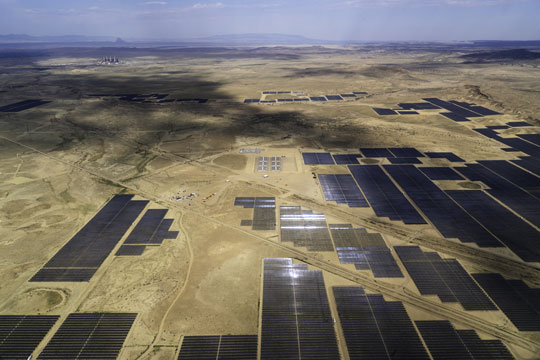
Under a 20-year power purchase agreement with PNM, the project is expected to generate enough clean energy to power roughly 52,400 homes — the first concrete proof that solar could replace what coal once provided here. San Juan Solar is the first phase of a larger buildout expected to reach 400 MW once fully developed.

Photo by: EcoFlight.

2024

San Juan Generating Station is Demolished

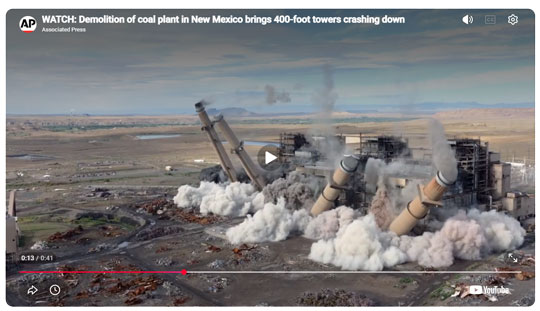
On August 24, 2024, the four 400-foot smokestacks that had defined the Farmington skyline for half a century came down in a controlled implosion — a moment residents, former plant workers, and clean energy advocates gathered to watch together. By late 2024, the site was nearly 90% demolished. But knocking down the stacks was only the visible part of the story: state environmental officials have since ramped up testing of the soil and water around the site to assess decades of coal ash and pollutant buildup, with a full cleanup and reclamation process still ongoing.

https://www.youtube.com/watch?v=HYq7r56IYDU

2024

New Mexico’s Clean Air Protections Get a Legal Green Light

In November 2024, the New Mexico Court of Appeals upheld the state’s Ozone Precursor Pollutants Rule (20.2.50 NMAC) against an industry challenge, rejecting arguments from the Independent Petroleum Association of New Mexico that the rule was flawed or unfairly applied. The ruling means the rule — which requires oil and gas operators in high-ozone counties, including San Juan, to monitor and fix leaks — remains firmly in place. As New Mexico Environment Secretary James Kenney put it: “These rules aren’t going anywhere.”

2026

Groundbreaking on Foxtail Flats and Four Mile Mesa

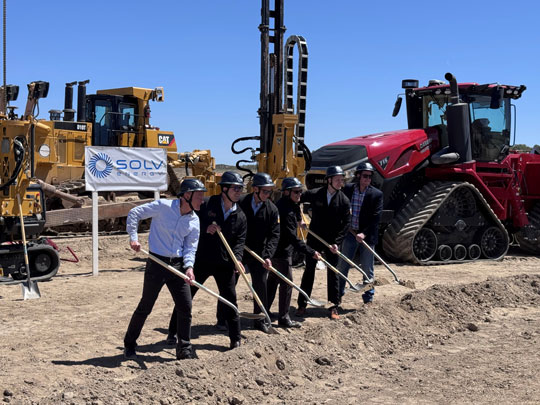
On May 14, 2026, the Ute Mountain Ute Tribe broke ground on Foxtail Flats (170 MW solar, 80 MW battery) and Four Mile Mesa (100 MW solar, 100 MW battery) — a combined $750 million investment on tribal land, the largest economic development project the region has seen in a decade. As landowner and partner, the Tribe stands to gain lasting jobs and revenue from a project built to power both Los Alamos and the broader grid.

[bold_timeline_item_button title=”Expand” style=”” shape=”” color=”” size=”inline” url=”#” el_class=”bold_timeline_group_button”]